

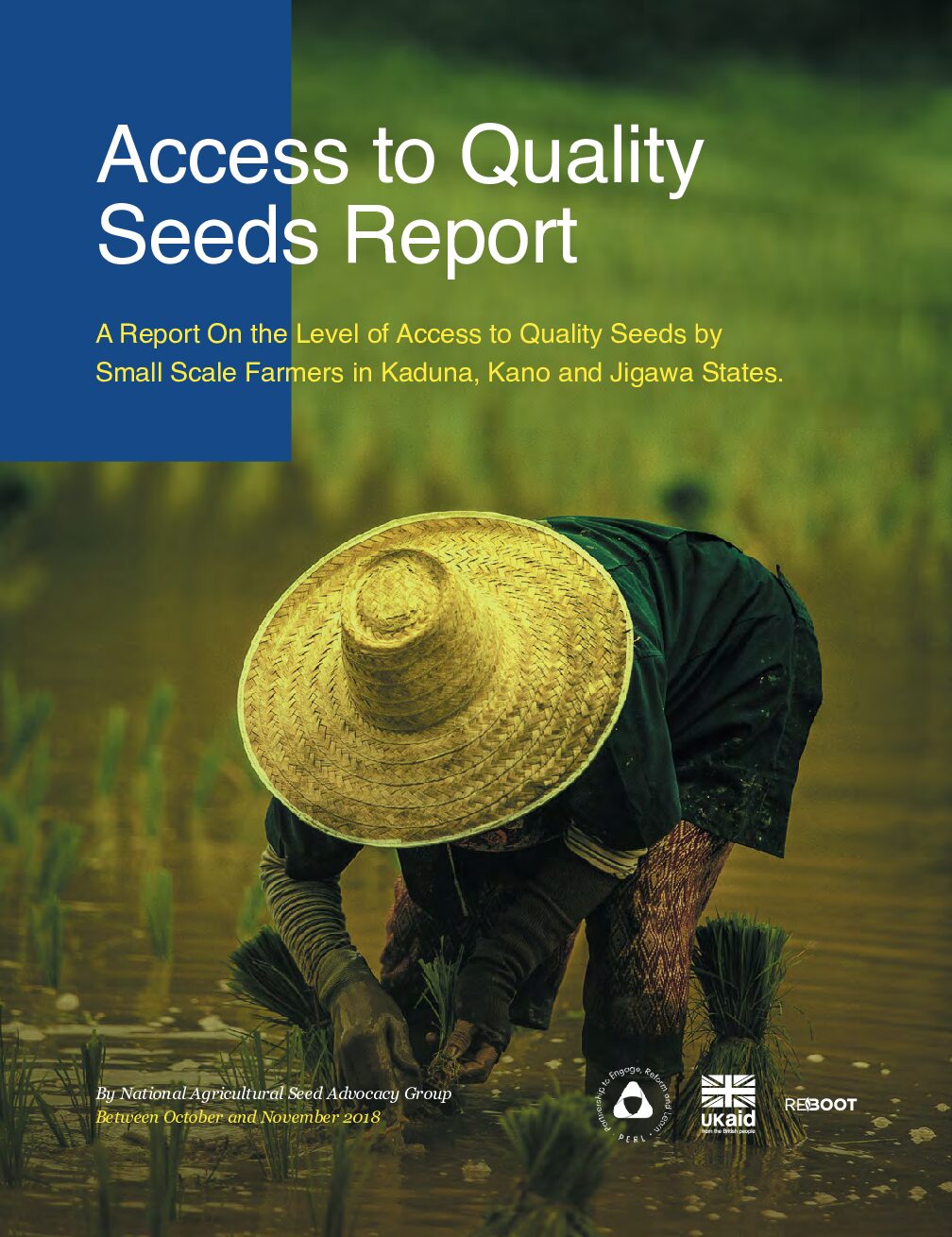
Agricultural policy often sounds abstract until you get down to something as basic as seed.
This report looked at a practical question in Kaduna, Kano, and Jigawa: why were smallholder farmers still struggling to get the right seed varieties, in the right quantities, at the right time? The answer turned out to be a mix of weak information, limited farmer voice, institutional gaps, and a procurement system that did not reliably line up with actual need.
My role
Research and advisory contributor to a study for the National Agricultural Seed Advocacy Group on access to quality seeds across three northern states.
What the work found
Many farmers could not reliably distinguish quality seed from grain by inspection alone. Many also had little knowledge of the National Agricultural Seed Council or the seed helpline that was supposed to support them. Across states, farmers had limited influence over decisions about seed variety, quantity, quality, or price.
What the report argued
The seed system was not only failing on supply. It was failing on feedback. If farmers have little visibility into what is available and little say in what gets procured, policy support can still miss the field by a wide margin.
Why it mattered
Seed access is not a side issue. It shapes whether broader agricultural support translates into actual production, income, and resilience for smallholder farmers.